What comes to mind when you hear the word mermaid?
Maybe you picture a shimmering tail disappearing beneath clear blue water. Perhaps you imagine long hair floating around a smiling face, a seashell necklace, a hidden underwater castle, or a mysterious figure sitting quietly on a rock beside the sea.
Most of us recognize a mermaid instantly.
But what exactly is a mermaid?
A mermaid is a mythical or folkloric being traditionally imagined with a human upper body and a fish-like tail. Mermaids belong to stories, legends, art and imagination rather than the natural world. There is no scientific evidence that mermaids exist as human-fish creatures.
Yet the idea of the mermaid has survived for centuries.
And it has never had just one appearance, one personality or one story.
Some mermaids are gentle and curious. Others are mysterious or dangerous. Some are connected with sailors and the open sea, while others belong to magical underwater kingdoms. Modern mermaids can be found in books, artwork, costumes, swimming performances, crafts and countless other creative forms.
So rather than looking for one perfect definition, let’s take a closer look at what makes a mermaid a mermaid meaning.
What Does a Mermaid Look Like?
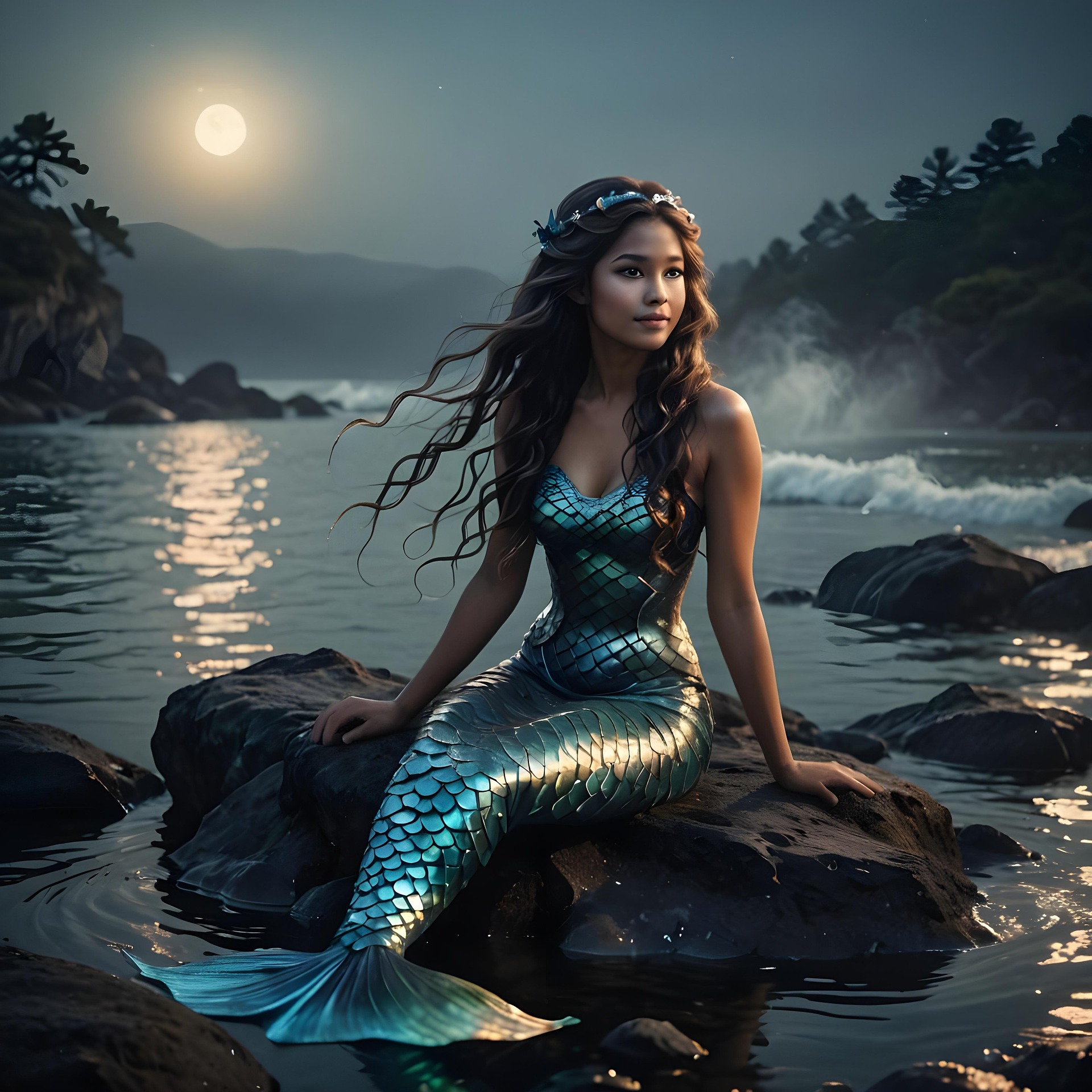
The most familiar mermaid has a human upper body and a long fish-like tail. That’s the image most of us recognize today.
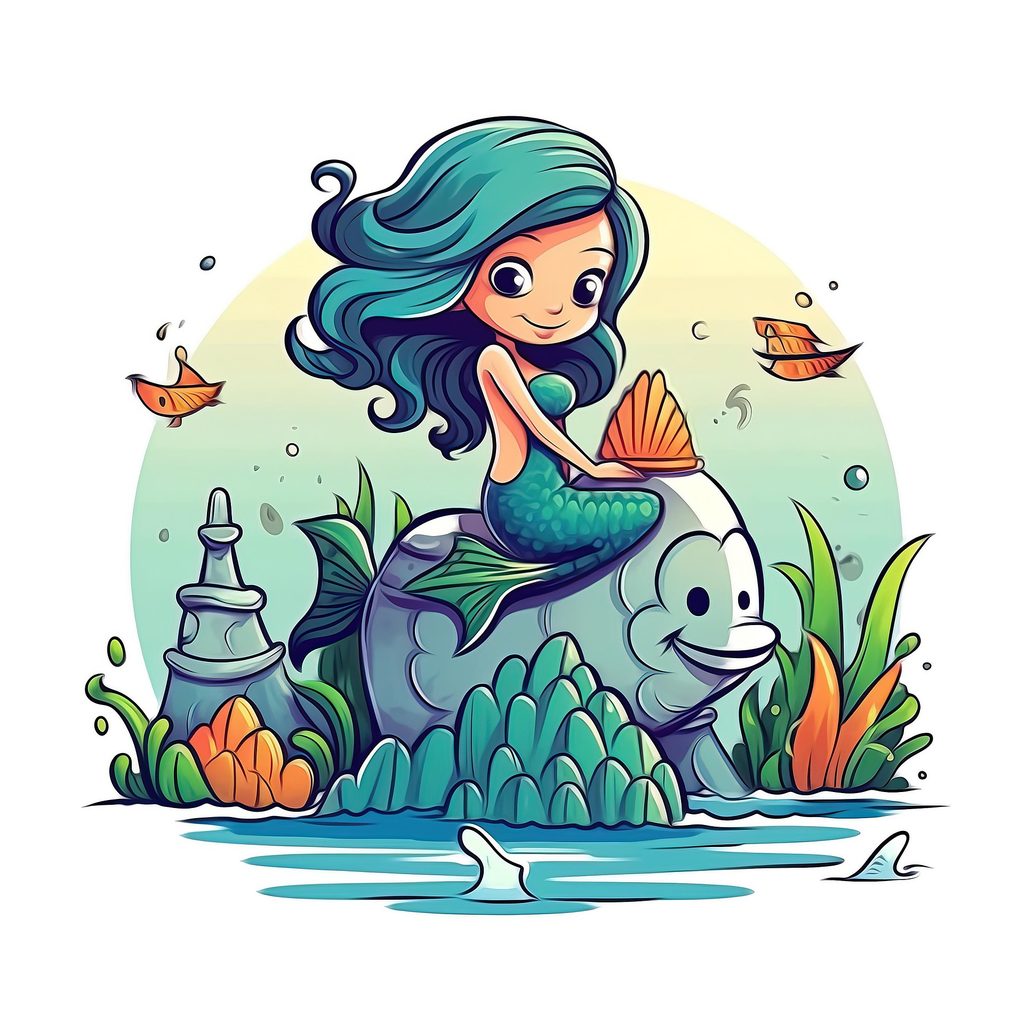
Artists often add flowing hair, scales, fins, shells, pearls, jewelry or other details inspired by the sea. The tail might be blue, green, silver, purple, gold or almost any color an artist can imagine.
But there is no official mermaid design. That’s one of the enjoyable things about mermaids.
A children’s illustrator might draw a cheerful character with bright colors and a friendly smile. A fantasy artist might create an elaborate underwater queen covered in pearls and coral. Another artist might imagine a darker, mysterious creature emerging from a stormy sea.
All of them can still be recognized as mermaids. The basic idea remains surprisingly simple:
a human-like being connected with the water and traditionally shown with a fish-like tail.
What Makes a Mermaid a Mermaid?

Although mermaids can look very different, several characteristics appear again and again in the familiar mermaid image.
A connection with water
The sea is the natural home of the mermaid in many stories.
Depending on the tradition, a water being may live in the ocean, near a coastline, in a river, lake or another body of water.
This connection with water is more than a background detail. It is part of what gives the mermaid her mysterious quality.
The ocean itself is vast, beautiful and still only partly understood. A mermaid seems to belong to that world just beyond our reach.
A human side
In the familiar mermaid tradition, the upper body is human.
That human appearance allows storytellers to give mermaids recognizable emotions and personalities. They can be curious, adventurous, lonely, playful, loving, mischievous or frightening.
This human side is one reason mermaid stories can feel surprisingly personal.
A mermaid may live in a world completely different from ours, but she can still experience feelings that readers understand.
A fish-like tail
The tail is the feature that immediately identifies the familiar mermaid.
Instead of human legs, she has a fish-like tail that allows her to belong visually to the underwater world.
There is no requirement that every tail look the same.
Some are smooth and simple. Others have detailed scales, flowing fins or dramatic colors. Artists can use the tail to give a mermaid a particular personality or style.
For someone drawing or designing a mermaid, this is where imagination really begins.
A life between two worlds
Perhaps the most interesting part of the mermaid idea is that she seems to belong to two worlds.
She has a human form but belongs to the water.
She may understand the world above the waves while also being part of a world hidden beneath them.
That feeling of being between two places has become one of the most appealing ideas associated with mermaids.

Do All Mermaids Look Beautiful?
No.
The beautiful, graceful mermaid is the version most familiar to modern audiences, but mermaid folklore is much more varied.
Some traditional water beings are described as mysterious, frightening or dangerous rather than glamorous.
Smithsonian’s overview of mermaid mythology notes that mermaids have appeared with different appearances, origins and personalities. Some stories portray them as threatening, while others give them kinder or more sympathetic qualities.
This is worth remembering when we think about mermaids today.
The sparkling, friendly mermaid with perfect hair and a colorful tail is only one version.
There is plenty of room for strange mermaids, funny mermaids, powerful mermaids, mysterious mermaids and everything in between.
Are Mermen Mermaids?
A male mermaid is generally called a merman.
The broader term merfolk can be used for mermaids, mermen and other human-like beings associated with the sea.
The basic idea remains similar: a human-like figure connected with water and traditionally represented with a fish-like lower body.
Modern fantasy has expanded this idea even further. Merfolk can now have many different appearances, personalities and backgrounds.
This flexibility is another reason the concept works so well in fantasy art and storytelling.
Are Mermaids Real?
This question deserves a straightforward answer.
There is no scientific evidence that mermaids exist as human-fish creatures.
Mermaids, as described in mythology and folklore, are fictional or legendary beings.
But that doesn’t mean every story about a mermaid began as a deliberate invention.
The ocean has always contained unfamiliar animals, strange shapes and things that can be difficult to identify from a distance.
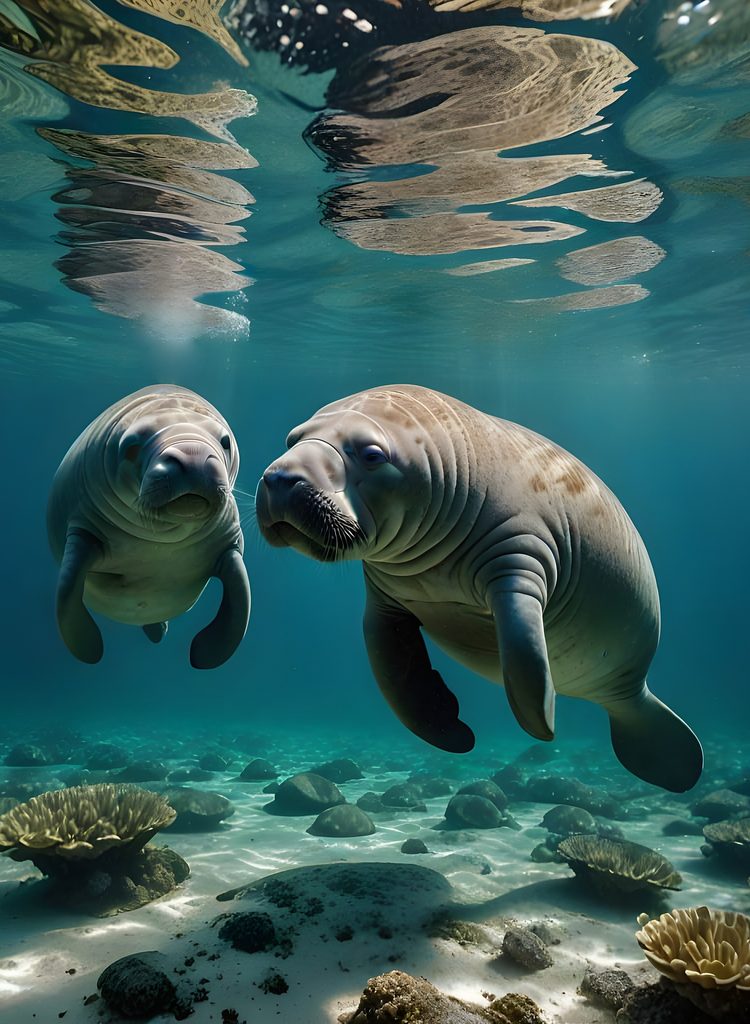
Manatees and dugongs, for example, have long been associated with stories of mermaid sightings. Smithsonian explains that their physical characteristics may have contributed to mistaken observations by sailors. Christopher Columbus’s 1493 account of seeing what he called mermaids is now understood as the first written record of manatees in North America.
That gives us an interesting distinction:
Mermaids aren’t real animals, but real animals may have helped inspire some mermaid stories.
The difference is important.
It allows us to enjoy the mystery without presenting folklore as zoology.
Where Did the Idea of a Mermaid Come From?
There isn’t one simple answer.
Stories about human-like beings connected with water developed in different places and periods, and they aren’t necessarily versions of one original story.
One early recorded example often discussed in connection with mermaid traditions is Oannes, a Babylonian figure described as part human and part fish. Smithsonian dates this tradition to the fourth century BCE.
But Oannes should not simply be called “the first mermaid.”
His story belongs to a particular ancient tradition, while the modern idea of a mermaid developed through many different stories and artistic traditions.
This is one reason mermaid history is so fascinating.
There isn’t a single straight road leading from one ancient character to the mermaids we know today.
Instead, many stories, images and ideas have contributed to the larger mermaid tradition.
We’ll explore those traditions in much greater detail in a future guide to mermaid legends around the world.
Mermaid or Siren?
Mermaids and Sirens are often confused today, but they don’t have identical histories.
Ancient Greek Sirens were traditionally described as creatures with bird-like bodies, rather than the fish tails associated with modern mermaids. Over later centuries, however, Sirens became increasingly connected with fish-tailed imagery, and the two concepts became closely associated in popular culture.
So when you see a modern picture labeled “Siren” that looks exactly like a mermaid, there is a long history behind that resemblance.
The subject deserves more attention than we can give it here, so we’ll explore it separately in Mermaid vs. Siren.
What Does a Mermaid Symbolize?
There isn’t one universal meaning.
A mermaid can represent different things depending on the story, culture or person imagining her.
She might symbolize:
- mystery
- beauty
- freedom
- the ocean
- imagination
- transformation
- adventure
- the unknown
- a connection between two worlds
For an artist, a mermaid can become a symbol of creativity.
For someone who loves the ocean, she might represent a feeling of belonging to the sea.
For a child, she may simply be a magical character who lives in an exciting underwater world.
And for someone who enjoys fantasy, the mermaid can be a reminder that imagination doesn’t need to follow ordinary rules.
There is no single correct interpretation.
That’s part of the beauty of the mermaid.
How Did the Mermaid Become So Familiar?
Mermaids have appeared in stories and artwork for a very long time, but their image has continued to change.
Literature played an important role.
One of the best-known literary mermaids is Hans Christian Andersen’s The Little Mermaid, first published on 7 April 1837. Andersen’s story presents a mermaid who longs for the human world and is concerned with gaining an immortal soul. It is considerably different from the version many people know through later adaptations.
Later books, illustrations, films and other forms of popular culture continued to reshape the character.
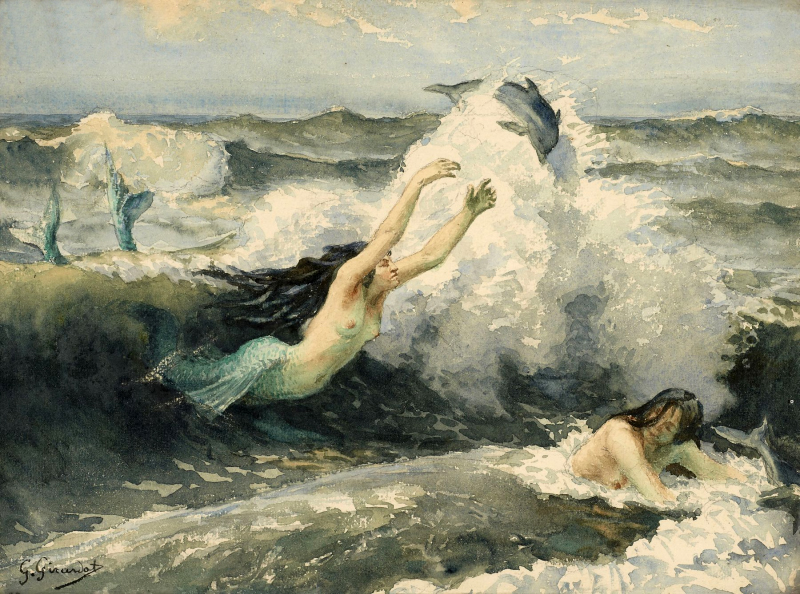
As a result, today’s mermaid can be many things at once:
a mythical creature,
a storybook character,
a fantasy figure,
an artistic subject,
a costume,
a swimming character,
or simply a symbol of life beneath the waves.
The Modern Mermaid
The modern mermaid has moved well beyond traditional folklore.
Today, people enjoy mermaids through drawing and painting, children’s books, fantasy stories, costumes, jewelry, parties, home decoration, crafts and many other creative activities.
There is also a modern practice known as mermaiding, in which people use mermaid-style tails or monofins for swimming, performance or entertainment.
This doesn’t mean that modern mermaiding is an ancient tradition.
It is a contemporary way of bringing the fantasy of the mermaid into real-world creative and performance activities.
That is one of the things that makes mermaids unusual.
Many mythical creatures remain mainly inside books and films.
The mermaid has found ways to step outside the story.
Why Do People Still Love Mermaids?
Perhaps it is because mermaids bring together several things people have always found fascinating.
There is the ocean and mystery along with beauty around fantasy.
And there is the feeling that another world might exist just beneath the surface.
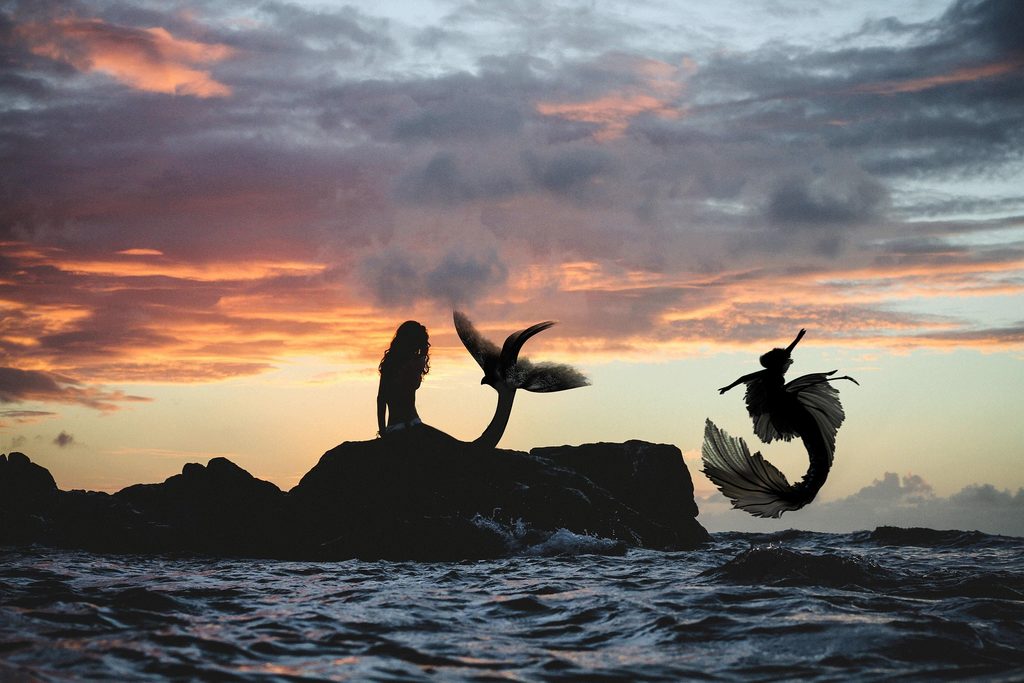
Mermaids also give people plenty of ways to be creative.
You can draw one.
Write a story about one.
Make a costume.
Decorate a room.
Create a birthday party.
Design a coloring page.
Swim like a mermaid.
Or simply sit beside the ocean and imagine what might be living below the waves.
You don’t have to believe that mermaids are real to enjoy them.
You only need to enjoy the idea.
So, What Is a Mermaid?
At its simplest, a mermaid is a mythical or folkloric water being traditionally imagined with a human upper body and a fish-like tail.
But that simple definition doesn’t quite capture everything people mean when they say “mermaid.”
A mermaid can be mysterious or cheerful.
Beautiful or strange. Kind or dangerous. Ancient in a legend or completely new in an artist’s imagination.
She can belong to a story from long ago or to a modern fantasy world created today.
Maybe that is why the mermaid has remained so appealing. The ocean is real.
The stories are real in the sense that people have told them, drawn them, written them and passed them along.
The mermaid herself belongs to imagination.
And perhaps that is exactly where she is meant to live.
At Mermaid Ways, that’s where the fun begins.