

Mermaids and Sirens are often treated as if they are the same creature.
You see a beautiful woman with flowing hair, a fish tail and a mysterious expression, and she may be called a mermaid in one story and a Siren in another.
It’s easy to understand why the confusion happens.
Both are connected with the sea. Both have appeared in stories about sailors. Both have been portrayed as beautiful, mysterious and sometimes dangerous. And over the centuries, their images have become mixed together in art and popular culture.

But historically, mermaids and the ancient Greek Sirens were not the same thing.
The difference becomes especially interesting when you look at how the two traditions developed and eventually began to overlap.
So, if you’ve ever wondered whether a Siren is a mermaid, whether mermaids are Sirens, or why some pictures show a Siren with a fish tail, let’s take a closer look.
The Short Answer
The simplest way to remember the difference is this:
A traditional mermaid is a human-like water being with a fish tail.
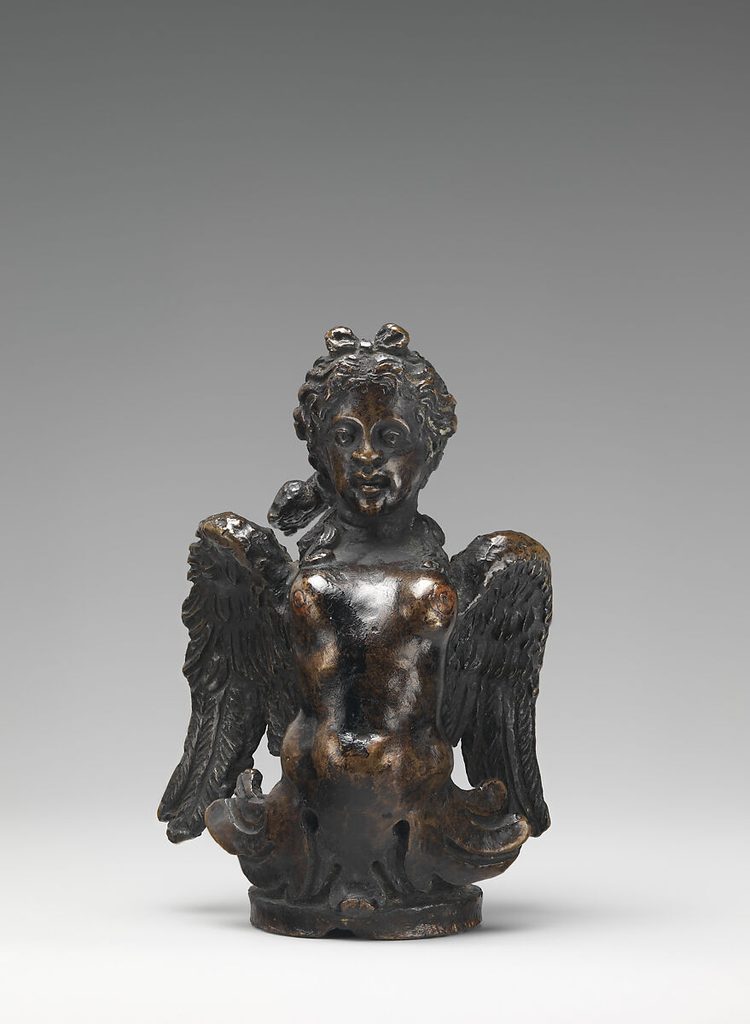
An ancient Greek Siren was a mythical creature associated with enchanting song and was traditionally depicted with a woman’s head and a bird’s body.
That’s the basic historical distinction.
But there is much more to the story.
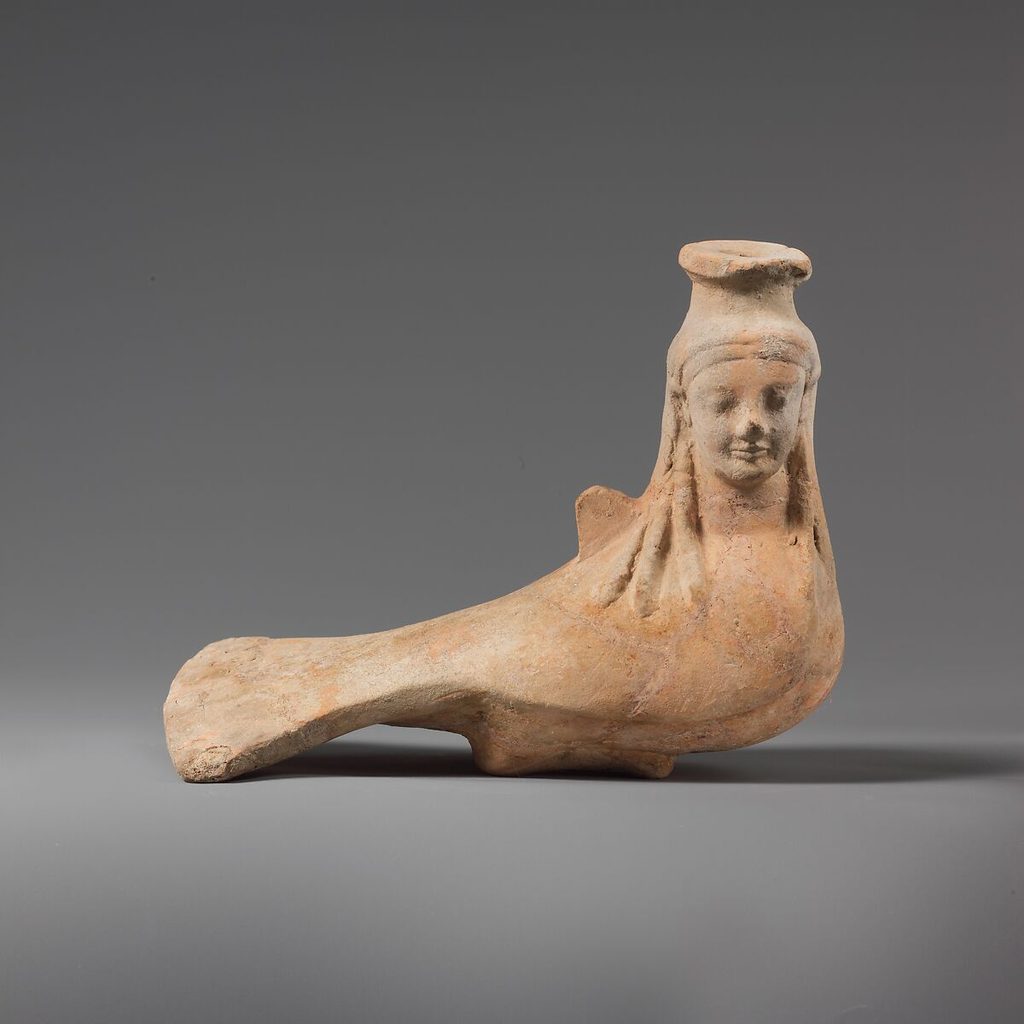
Ancient Greek artwork shows Sirens with bird features, including wings, bird bodies, tails and feet. The British Museum, for example, has several ancient objects depicting Sirens as woman-bird creatures.
The familiar fish-tailed mermaid belongs to a different and much broader tradition of water beings.
Over time, however, the imagery began to overlap.
And that’s where things get fascinating.
What Is a Mermaid?
A mermaid is a mythical or folkloric being traditionally imagined with a human upper body and a fish-like tail.
The word “mermaid” itself belongs to the European tradition, but stories of human-like water beings are found in many cultures.
Mermaids may be portrayed as beautiful, kind, mysterious, curious, dangerous or even frightening.
They don’t all have the same personality.
They don’t all have the same story.
And they don’t all look exactly alike.
The familiar modern image usually includes:
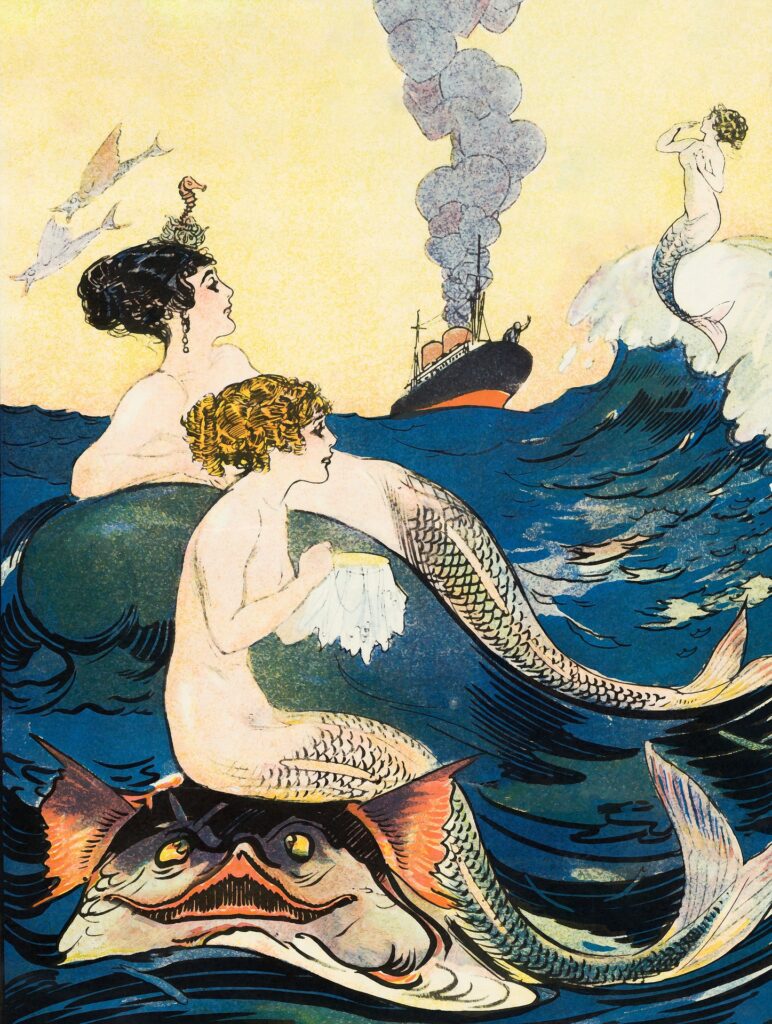
- a human face and upper body
- a fish-like tail
- long hair
- fins or scales
- a connection with the ocean
- sometimes magical abilities
But these characteristics are not a strict rulebook.
Artists and storytellers have always had room to imagine mermaids differently.
What Is a Siren?
The ancient Greek Siren is a different creature.
In Greek mythology, Sirens were associated particularly with enchanting music and song.
Their most famous appearance is in Homer’s Odyssey.
Odysseus and his crew encounter the Sirens during their journey home. The Sirens’ beautiful singing is so dangerous that Odysseus has himself tied to the ship’s mast so that he can hear their song without being able to steer the ship toward them.
His sailors block their ears so they cannot hear the Sirens’ voices.
The story is not simply about beautiful women sitting peacefully beside the water.
The song is a trap.
The Sirens use their voices to lure sailors toward destruction.
The Metropolitan Museum of Art describes the Sirens in The Odyssey as creatures whose song could beguile sailors to their deaths.
The Biggest Difference: Their Bodies
This is probably the easiest way to tell them apart historically.
Traditional Mermaid
Human upper body + fish tail
Ancient Greek Siren
Human head/upper body + bird body, wings and bird feet
Ancient Greek art repeatedly shows Sirens as bird-human hybrids.
The British Museum describes a Hellenistic terracotta Siren as having a woman’s body and head combined with wings, a bird’s tail and bird feet.
Another ancient Greek vessel in the British Museum shows Sirens as birds with women’s heads while Odysseus is tied to his ship’s mast.
So if you traveled back to ancient Greece and saw an image of a Siren, you would not necessarily see the beautiful fish-tailed woman we recognize today.
You would be much more likely to see something with wings.
Why Do People Think Sirens Have Fish Tails?
This is where the history gets more complicated.
At some point, the visual traditions surrounding Sirens and other sea creatures began to overlap.
The change didn’t happen overnight.
The ancient Greek Siren was strongly associated with a bird-like form. But medieval and later European artists, writers and storytellers increasingly connected Sirens with the sea and with fish-tailed imagery.
The Metropolitan Museum of Art notes that ancient Greek Sirens were represented as bird-bodied creatures, while their appearance and symbolism changed over time until they came to resemble mermaids.
A scholarly discussion published by the Metropolitan Museum also notes that mermaid imagery became increasingly common during the medieval period, while later representations of Sirens became more varied. By the sixteenth century, bird-Sirens and fish-Sirens could even appear together in European visual culture.
So the modern confusion isn’t completely random.
There really was a long period during which the two images began to move closer together.
Mermaid vs. Siren: A Simple Comparison
| Feature | Mermaid | Ancient Greek Siren |
| Traditional body | Human + fish tail | Woman + bird body |
| Main connection | Water, sea, rivers or lakes | Enchanting song and dangerous attraction |
| Famous literary connection | Many legends and later stories | Homer’s Odyssey |
| Typical danger | Varies by story | Luring sailors to destruction |
| Tail | Usually fish-like | Traditionally bird-like |
| Wings | Usually no | Traditionally yes |
| Singing | Sometimes | Central to their mythology |
| Personality | Can be kind, mysterious or dangerous | Traditionally dangerous and deceptive |
| Modern appearance | Usually fish-tailed | Often confused with mermaids |
This table describes the traditional/historical distinction. Modern fantasy doesn’t always follow it.
Were Sirens Always Evil?
Not exactly.
The ancient Sirens are certainly dangerous in the best-known stories.
Their song is deadly, and the sailors who fall under its spell are doomed.
But describing them simply as “evil women with tails” misses much of their complexity.
They are fascinating because their power comes through knowledge, music, beauty and temptation.
In Homer’s Odyssey, the Sirens promise Odysseus something more interesting than simple pleasure. Their song offers knowledge and awareness.
That makes the story more psychologically interesting.
The danger isn’t just:
“The monster will attack you.”
It is:
“You may hear something so beautiful and irresistible that you willingly move toward your own destruction.”
That idea has kept the Sirens alive in literature for thousands of years.
Were Mermaids Always Beautiful and Friendly?
No.
Modern popular culture has given us plenty of cheerful mermaids with colorful tails, sparkling accessories and friendly personalities.
Traditional mermaid folklore can be much darker.
Some water beings associated with mermaid traditions were believed to bring storms, shipwrecks, drowning or other misfortune.
Others were mysterious rather than outright evil.
Some stories even portray water beings as helpful or sympathetic.
So there is no single personality that defines every mermaid.
The same is true of Sirens.
The two traditions have both changed considerably over time.
Are Mermaids and Sirens Both Connected With Sailors?
Yes, and this is one reason the confusion is so understandable.
Sailors spent long periods at sea in a world that was difficult to predict.
They encountered unfamiliar animals, strange weather, fog, distant shapes and unfamiliar coastlines.
Stories about mysterious beings in or near the water naturally became part of maritime folklore.
Sirens were especially connected with sailors through The Odyssey.
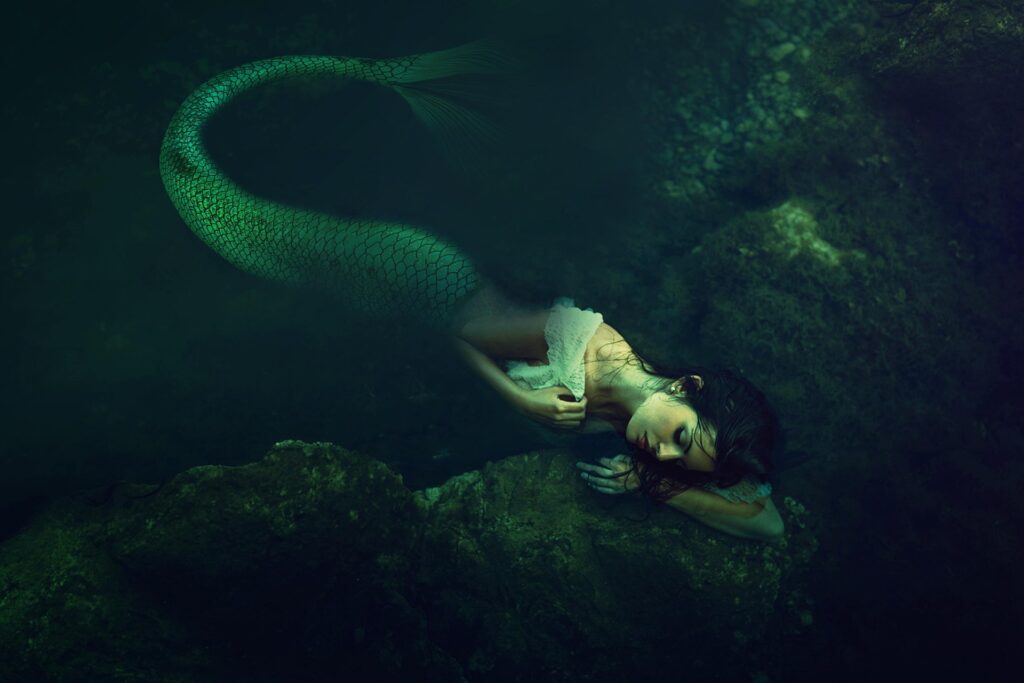
Mermaids also became associated with sailors and sea voyages in later folklore.
And real marine animals probably contributed to some mermaid stories as well.
Manatees and dugongs, for example, have long been associated with reports of mermaid sightings. Smithsonian notes the connection between these animals and historical mermaid accounts, including Christopher Columbus’s famous 1493 report.
That doesn’t make mermaids real animals.
It simply shows how real observations, imagination and storytelling can become mixed together.
What About the Word “Sirenia”?
Here’s a wonderful little connection between the two subjects.
The scientific order that includes manatees and dugongs is called Sirenia.
That name comes from the old association between these animals and the legendary Sirens.
It is a beautiful example of mythology leaving a mark on scientific language.
Manatees and dugongs are real aquatic mammals.
Sirens are mythical beings.
Yet the two names became connected because people historically associated unusual aquatic animals with mermaid- or Siren-like creatures.
Is a Siren a Mermaid Today?
This depends on what you mean by “Siren.”
If you’re talking about ancient Greek mythology, then no.
The traditional Greek Siren was not a fish-tailed mermaid.
If you’re talking about modern fantasy and popular culture, the answer becomes much less definite.
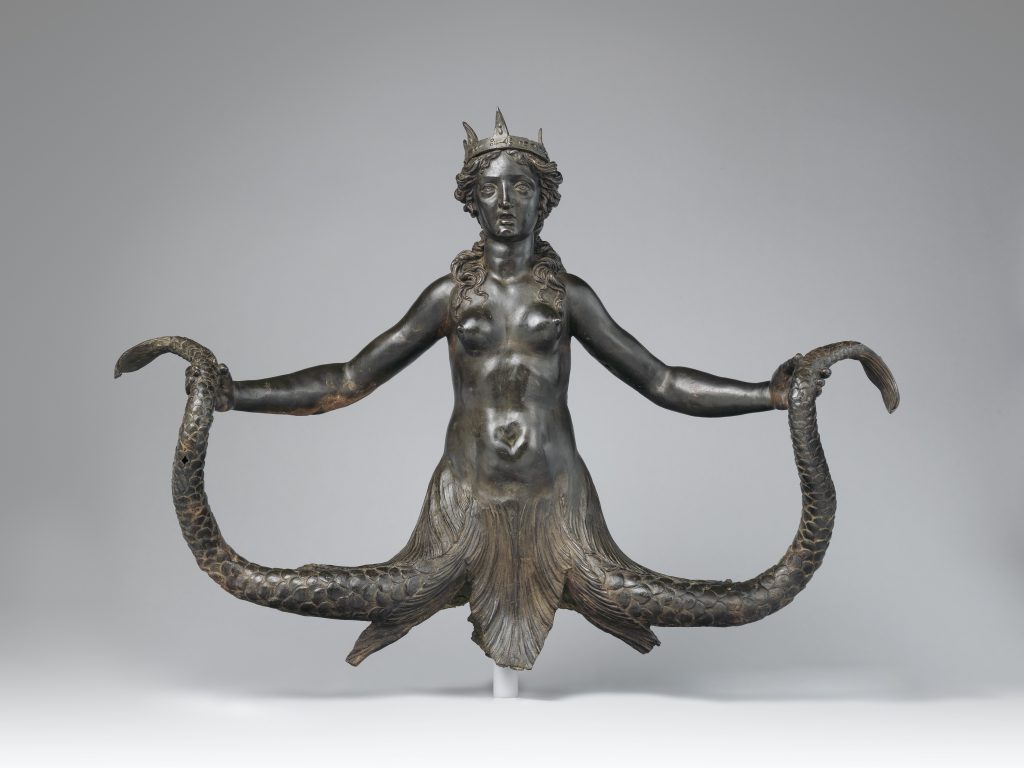
Today, “Siren” is sometimes used for a beautiful supernatural woman associated with the sea, singing, temptation or danger.
Some modern artists depict her with a fish tail.
Others give her wings.
Some combine elements of both.
And some create an entirely new creature.
Modern fantasy doesn’t always follow ancient mythology strictly.
That’s perfectly normal.
Fantasy artists and storytellers have always borrowed old ideas and reshaped them.
Why Did the Two Become So Similar?
There are several reasons.
Both belong to the world of water and mystery
The sea is a natural setting for mythical creatures.
It’s enormous, difficult to explore and full of things humans historically didn’t understand.
Both mermaids and Sirens fit naturally into that mysterious environment.
Both are connected with human beauty
The human appearance of both creatures makes them emotionally recognizable.
A completely unknown sea monster might be frightening.
A beautiful human-like creature is different.
She can speak.
She can sing.
She can look at you.
She can tempt you.
She can become part of a story.
Artists changed old imagery
Mythological creatures don’t remain frozen in one form.
Artists reinterpret them.
Writers reinterpret them.
Different cultures reinterpret them.
Over hundreds of years, those changes can become so familiar that people forget what the creature originally looked like.
That is part of what happened with Sirens.
Siren vs. Mermaid in Modern Stories
Today, writers have enormous freedom.
A modern fantasy author might create:
A traditional mermaid
A fish-tailed woman living beneath the sea.
A traditional-style Siren
A winged woman whose song has supernatural power.
A modern fish-tailed Siren
A sea creature whose beautiful voice attracts sailors.
A completely new hybrid
A character combining elements of mermaids, Sirens and other mythology.
None of these approaches is necessarily wrong in a fictional story.
The important thing is to understand the historical background before changing it.
That’s where the fun really begins.
Once you know the original traditions, you can deliberately bend them.

What About the “Deadly Mermaid” Idea?
This is another area where mermaids and Sirens are sometimes blended.
Modern stories sometimes portray mermaids as dangerous seductresses who lure sailors to their deaths.
That idea fits the ancient Siren particularly well.
But it isn’t the only mermaid tradition.
The mermaid can be:
- gentle
- curious
- lonely
- adventurous
- playful
- mysterious
- romantic
- protective
- dangerous
The personality depends on the story.
The same flexibility is one reason mermaids have remained so popular.
Can a Mermaid Be a Siren?
In a modern fantasy story?
Absolutely.
If you are creating your own fictional world, you can decide that your mermaids are also Sirens—or that Sirens are a special type of merfolk.
For example, you could create a world where:
- ordinary merfolk have fish tails
- Sirens have magical singing voices
- Sirens can control currents through music
- some Sirens have wings
- others have fins
- ancient Sirens were feared by sailors
- modern merfolk consider them guardians of the deep
That’s storytelling.
But if you’re discussing ancient Greek mythology, it’s better to keep the traditional distinction clear.
That small distinction makes your writing more accurate while still leaving plenty of room for imagination.
What About Mermaid Legends Around the World?
The mermaid-versus-Siren story becomes even more interesting when you look beyond Greece.
Different cultures have their own water beings and traditions.
Some resemble the familiar fish-tailed mermaid.
Others are spirits, river beings, sea creatures or supernatural figures with completely different appearances.
They don’t all come from the same story.
And they shouldn’t all be automatically labeled “mermaids.”
That is one reason the history of mermaids is so fascinating.
The idea of a human-like being connected with water appears in many different cultural traditions, but the details can be dramatically different.
We’ll explore those stories separately in Mermaid Legends Around the World.
So, Which One Is More Dangerous?
If we’re talking about their classic mythological roles, the Siren has the stronger reputation for deliberate danger.
Her song is a weapon.
Her beauty and music are part of the trap.
The traditional mermaid is much harder to categorize.
Depending on the story, she may be harmless, helpful, mysterious, romantic or dangerous.
So if you meet a mysterious woman beside the sea in a fantasy story, don’t immediately assume she’s a Siren.
Look at the tail.
Listen to the song.
And perhaps most importantly, pay attention to what happens next.
Mermaid or Siren? Here’s the Easy Way to Remember
If you only remember one thing from this article, remember this:
Mermaid = fish tail.
Ancient Greek Siren = bird body and enchanting song.
The modern world has blurred those boundaries, but historically they began as different mythical traditions.
And perhaps that’s what makes the subject so interesting.
The mermaid and the Siren didn’t simply remain frozen in ancient stories.
Their images changed.
Artists changed them.
Writers changed them.
Cultures borrowed from one another.
And eventually, the fish-tailed Siren became familiar enough that many people today assume she has always looked that way.
She hasn’t.
A Final Thought
Mermaids and Sirens are a wonderful example of how mythology evolves.
A story can begin in one form and travel through centuries of art, literature and imagination.
Along the way, details change.
A bird may become a fish.
A dangerous creature may become a romantic character.
A frightening legend may become a children’s story.
And something that once belonged to ancient mythology may eventually become part of modern fantasy.
That’s why learning the history doesn’t take away the magic.
It adds another layer to it.
So the next time you see a beautiful, mysterious creature rising from the sea, take a closer look.
Is she a mermaid?
A Siren?
A little bit of both?
Or something entirely new?
That’s the wonderful thing about the world beneath the waves.
There is always another story waiting to be discovered.