
When most people hear the word mermaid, they probably picture a beautiful woman with a shimmering tail, long flowing hair and an underwater home.
That familiar image is only one part of a much larger world of water legends.
For thousands of years, people in different parts of the world have told stories about mysterious beings connected with oceans, rivers, lakes, springs and sacred pools. Some have human and fish-like features. Others are associated with seals, snakes, birds or other creatures.
Some are beautiful and helpful. Others are mysterious or dangerous. Some are connected with fertility, healing or wealth, while others warn people about the power and unpredictability of water.
And there is an important point to remember:
A water spirit that resembles a mermaid is not necessarily the same thing as the traditional European mermaid.
The stories developed in different cultures and historical settings. Their similarities are fascinating, but their differences matter too.
Let’s travel around the world and explore some of these remarkable traditions.
1. Ancient Near East: Atargatis and the Fish-Tailed Goddess
One of the most famous ancient figures associated with mermaid-like imagery is Atargatis, a goddess worshipped in the ancient Near East.
She was associated with fertility, water and fish. Ancient writers and later artistic traditions connected her with fish symbolism, and representations of the goddess or related figure Derceto could show a woman with a fish-like lower body.
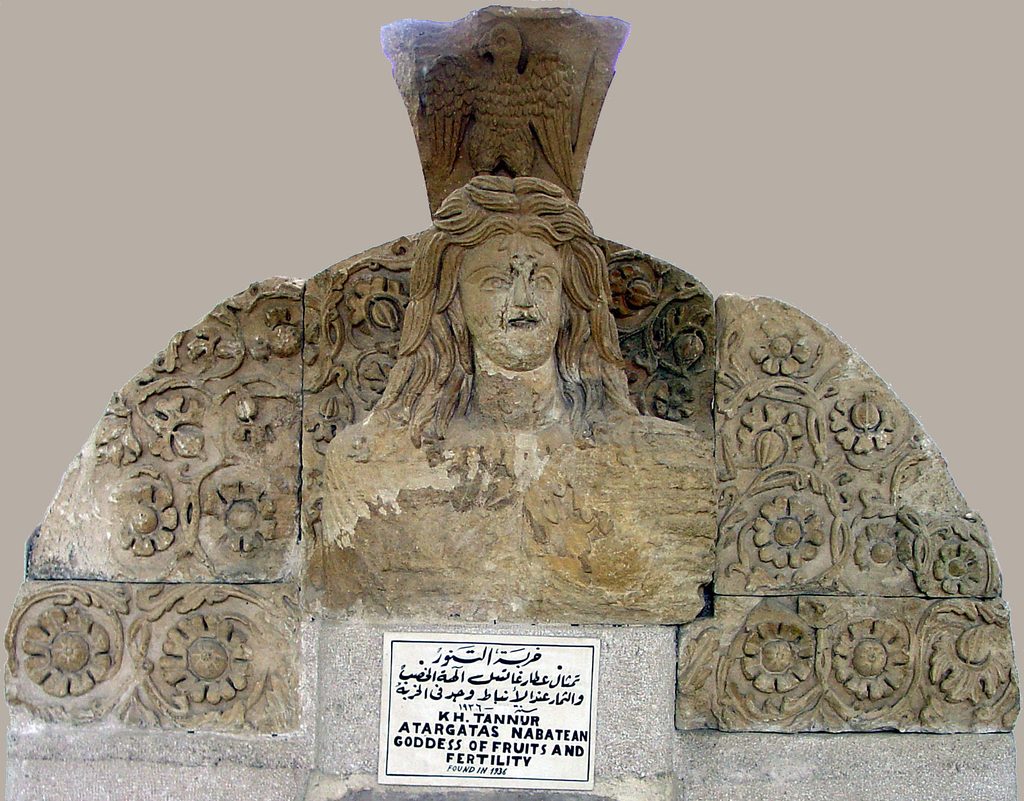
This makes Atargatis particularly interesting when looking at the long history of mermaid imagery.
But she should not simply be called “the first mermaid.”
Atargatis was a goddess, with her own religious traditions and worship. Her story belongs to the ancient religious world of the Near East rather than to the modern idea of a fictional mermaid.
Her connection with water also reflects something that appears repeatedly in ancient cultures: water can represent life, fertility and abundance while also being powerful and unpredictable.
2. Ancient Babylon: Oannes, the Fish-Man Teacher
Another fascinating early figure is Oannes, described in the writings of the Babylonian priest Berossus.
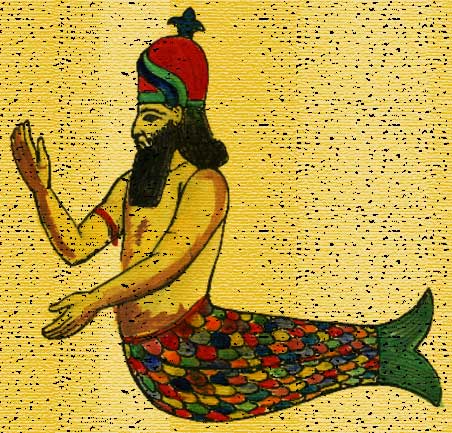
Oannes was said to emerge from the sea and teach humanity useful knowledge. His traditional description combines human and fish-like characteristics.
Unlike the dangerous mermaid of some later European tales, Oannes is remembered primarily as a teacher and bringer of knowledge.
His story gives us a very different way of imagining a being from the water.
Instead of the sea representing temptation or danger, it becomes a source of wisdom.
That difference is worth remembering when exploring mermaid mythology. Water beings have never had just one personality or purpose.
3. Ancient Greece: The Sirens
The ancient Greek Sirens are probably the water-related creatures most often confused with mermaids.
But their earliest traditional appearance was quite different.
In ancient Greek art, Sirens were generally shown with a woman’s head and a bird-like body, sometimes with wings and bird feet. Their most famous characteristic was their enchanting song.
In Homer’s Odyssey, the Sirens sing to passing sailors and draw them toward danger. Odysseus famously has himself tied to the mast of his ship so he can hear their song without steering toward them.
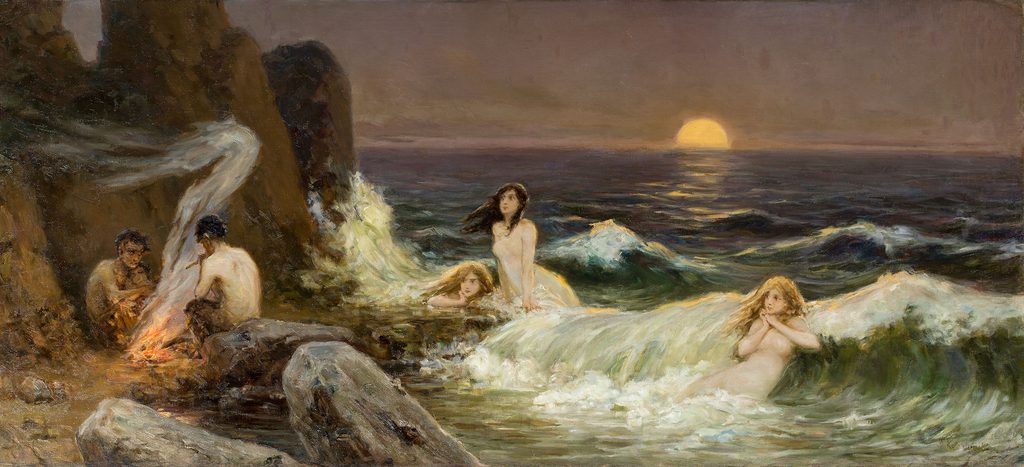
Over later centuries, the appearance of Sirens changed. Medieval and later European artists increasingly connected them with the sea and fish-tailed imagery.
This helped create the confusion that still exists today.
So although a modern fantasy artist may freely create a fish-tailed Siren, the ancient Greek Siren and the traditional mermaid did not begin as the same creature.
4. Western Europe: The Traditional Mermaid
The familiar European mermaid is usually represented with a human upper body and a fish-like tail.
Stories about such beings developed in different parts of Europe and took many forms.
Mermaids were not always friendly characters. Depending on the story, they could be mysterious, beautiful, dangerous or associated with storms, shipwrecks and bad fortune.
Some stories described mermaids attracting sailors or humans toward the water. Others gave them more sympathetic characteristics.
The traditional mermaid therefore has a fascinating dual nature.
She can represent the beauty of the sea while also reminding people that the ocean is powerful and cannot always be trusted.
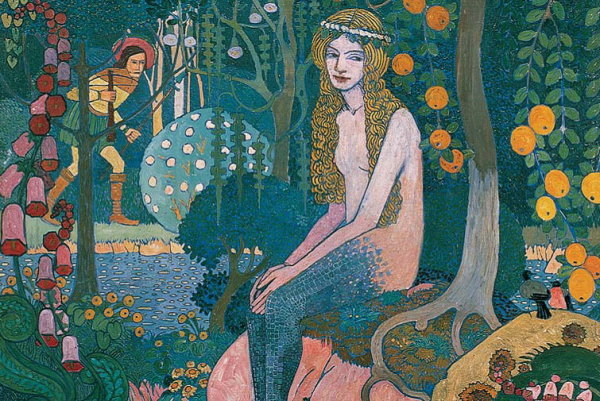
That mixture of beauty and danger became one of the most enduring features of European mermaid folklore.
5. France and Europe: Melusine
Melusine is one of Europe’s most famous supernatural women associated with water.
Her legend is particularly connected with France and the medieval noble family of Lusignan.
Melusine is often described as a woman who periodically takes on a serpent-like or fish-like form below the waist. Some artistic representations give her two tails or other unusual features.
Her story is not simply a story about an ocean mermaid.
Melusine is associated with springs, water, castles, family ancestry and a supernatural promise. A recurring theme is a secret condition that must be respected. When that condition is broken, the relationship between the human and supernatural worlds changes dramatically.
Melusine shows how mermaid-like imagery can develop around freshwater and family legend, not just the open sea.
6. Slavic Folklore: The Rusalka
The rusalka is a female water-associated spirit found in Slavic folklore.
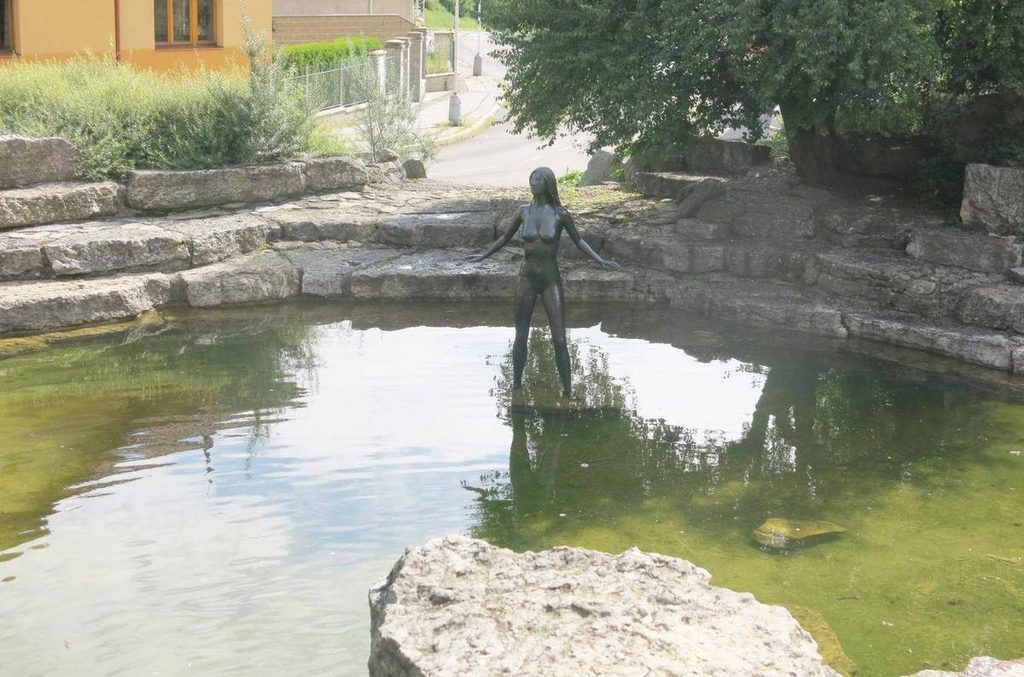
It is tempting to translate rusalka simply as “mermaid,” but that can make the tradition sound more uniform than it really is.
Different regions and periods have told different kinds of rusalka stories.
Rusalki may be associated with rivers, lakes, ponds and other watery places. Some traditions connect them with fertility, vegetation and seasonal celebrations. Other stories give them a much darker character and portray them as dangerous beings who may lure people toward the water.
Their appearance also varies.
They may be described as beautiful young women, pale spirits or supernatural figures with long hair.
The rusalka is therefore better understood as a Slavic water spirit with some similarities to the mermaid, rather than simply a Slavic mermaid.
7. Scotland and Ireland: Selkies
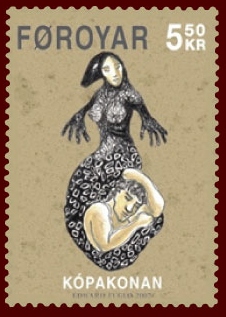
Selkies are another famous example of a sea-related supernatural being that is often mentioned alongside mermaids.
But selkies do not have fish tails.
They are traditionally described as seals that can take human form.
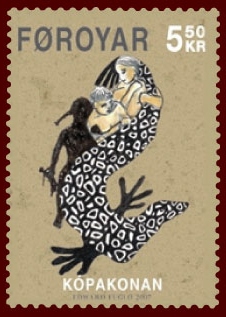
In many stories, a selkie can remove its seal skin and become human on land. A common story pattern involves a person finding or hiding the selkie’s skin, preventing the creature from returning to the sea.
These stories often explore love, longing, freedom and separation.
The selkie therefore belongs to a different tradition from the mermaid, but the two share an intriguing theme:
a being that belongs partly to the human world and partly to the world of the sea.
8. Japan: The Ningyo
Japanese folklore includes the ningyo, a term often translated into English as “mermaid” or “human-fish.”
However, the traditional ningyo does not necessarily resemble the beautiful Western mermaid.
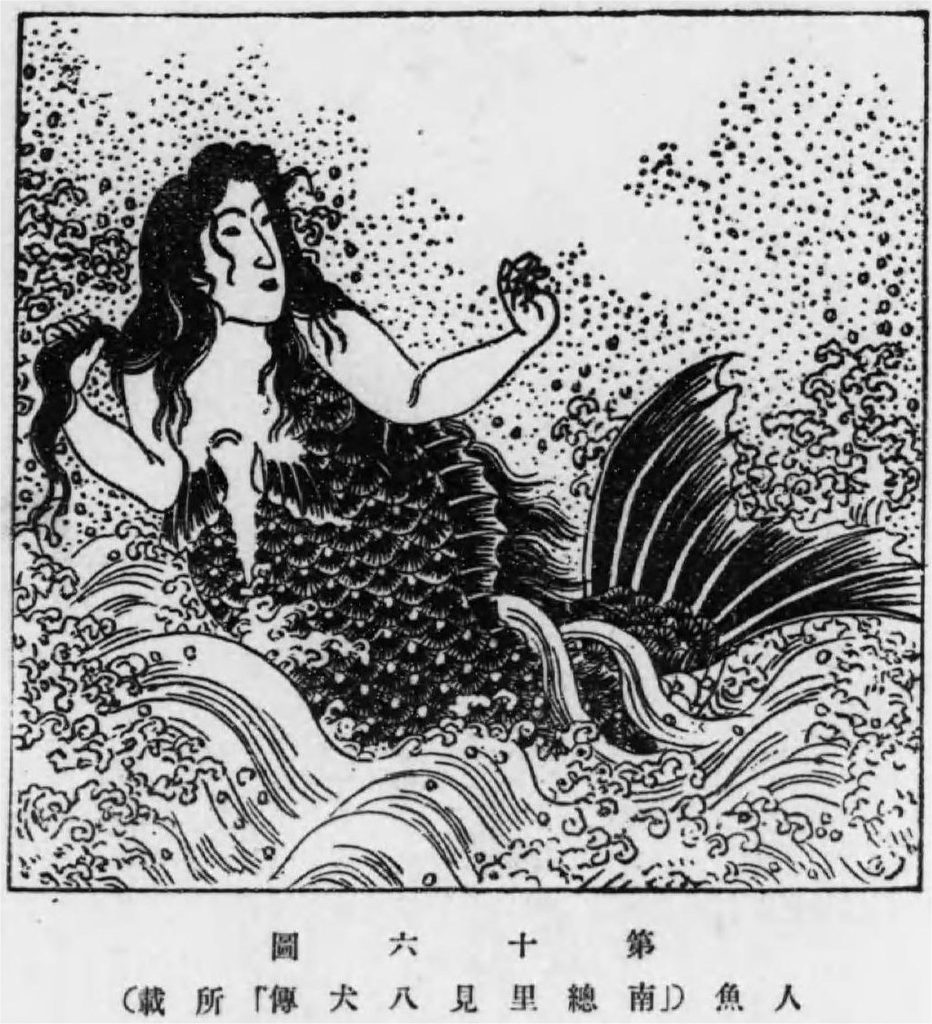
Descriptions vary across historical sources. Some accounts describe an unusual creature combining human and fish-like characteristics, sometimes with strange or frightening features.
Stories about ningyo also developed different meanings over time.
In some traditions, encountering one could be considered an ominous sign. Other stories connected the creature with extraordinary longevity, including the famous tale of a woman who supposedly lived for centuries after consuming ningyo flesh.
The ningyo is therefore a good reminder that a “mermaid” does not have to be a graceful woman with a colorful tail.
It can also be strange, mysterious and even unsettling.
9. West and Central Africa: Mami Wata
Mami Wata is one of the best-known water-spirit traditions associated with Africa and the African diaspora.
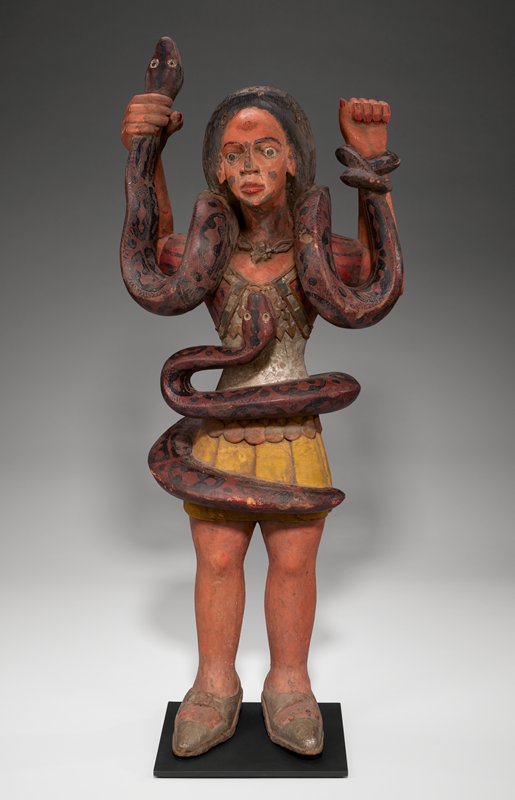
Mami Wata is not simply one fixed character with one appearance. Different communities have understood and represented her in different ways.
She may be shown as a beautiful woman, a mermaid-like figure or a spirit associated with a snake. Her traditions can involve water, beauty, wealth, healing, fertility, spiritual power and danger.
Her history is also a fascinating example of cultural exchange.
Mami Wata traditions developed within African societies while also being influenced by images and ideas that circulated through trade and contact with other parts of the world.
Today, Mami Wata remains an important subject in African and African-diaspora art and religious traditions.
It is more accurate to understand her as a powerful water spirit with a complex cultural history than simply as an African mermaid.
10. Cameroon: Jengu
Among the Sawa peoples of Cameroon, traditions include Jengu, water spirits associated with rivers and the sea.
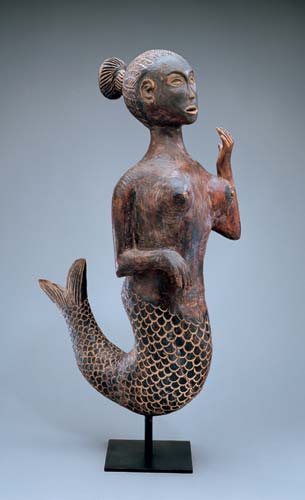
Jengu are often described as beautiful beings with fish-like characteristics. Depending on the tradition, they can be associated with healing, fertility, prosperity and communication between humans and the spiritual world.
They are sometimes described in English as “mermaids,” but that translation can hide their specific cultural meaning.
Jengu belong to their own tradition and should not be treated as merely another version of the European mermaid.
This is an important lesson when comparing mythology around the world:
similar appearance does not necessarily mean identical meaning.
11. Haiti and the Caribbean: Lasirèn
In Haitian Vodou, Lasirèn is a powerful water spirit often represented in mermaid-like form.
She is associated with the sea and may be represented with long hair, a mirror and a comb. Music, beauty, wealth, attraction and spiritual knowledge are among the themes associated with her.
Lasirèn is part of the rich cultural history of Haiti and the wider Caribbean, where African traditions interacted with European and other influences.
She should not be reduced to the idea of a “Caribbean mermaid.”
Lasirèn has her own place within Haitian religious tradition.
Her story is also an example of how water-spirit traditions can change as cultures meet, migrate and develop new communities.
12. Australia: Yawkyawk
In the traditions of Western Arnhem Land in northern Australia, Yawkyawk are freshwater ancestral beings associated with sacred waterways.
They are often described by outsiders as mermaid-like because of their female human form and fish-like characteristics.
But Yawkyawk are much more than a decorative version of the Western mermaid.
They belong to Aboriginal Australian cultural traditions and are connected with particular places, waterways and ancestral knowledge.
The National Museum of Australia describes Yawkyawk as freshwater mermaid-like ancestral spirits associated with the waterways of Central and Western Arnhem Land.
Their stories are part of living First Nations culture, not simply ancient fairy tales.
That distinction matters.
When we encounter traditions belonging to Indigenous communities, it is important to respect their specific cultural meaning rather than turning them into generic fantasy characters.
13. New Zealand: Marakihau

Māori traditions include marakihau, unusual supernatural sea beings associated with the ocean.
They are often represented as having a human-like head and a long, fish-like body. Some depictions include a distinctive tubular tongue.
Marakihau are sometimes included in modern collections of “mermaid-like creatures,” but they should not simply be described as Māori mermaids.
They belong to Māori traditions concerning powerful beings of the sea.
Their appearance also demonstrates how different cultures can imagine aquatic beings in ways that are quite different from the familiar European woman-with-a-fish-tail image.
14. Papua New Guinea: Ri or Ilkai
Papua New Guinea has traditions involving a human-like sea creature sometimes known as Ri or Ilkai, and also described in some sources as a fish-woman.
The creature has been compared with the European mermaid because of its human-like appearance and connection with the sea.
There is also an interesting connection with a real animal.
The Indo-Pacific dugong lives in the waters of the region, and some historical reports of mysterious human-like creatures in the water have been linked to dugongs.
The Queensland Museum notes that creatures once associated with these mermaid-like reports were later identified as dugongs, while local belief in mysterious water beings has continued.
This is a good example of something that appears repeatedly in mermaid history:
folklore and natural observation can exist side by side.
A scientific explanation for a particular sighting does not automatically erase the cultural story surrounding it.
15. Why Do So Many Cultures Have Water Legends?
Once we start looking, it is remarkable how many cultures have stories about beings associated with water.
But this does not necessarily mean that every tradition came from one original mermaid story.
There are several possible reasons water beings appear so frequently.
Water is mysterious
For most of human history, people could not see very far beneath the surface of the ocean or deep lakes.
There were enormous underwater worlds that humans could only imagine.
Water is powerful
Water gives people food, transportation and drinking water.
It can also cause floods, storms, shipwrecks and destruction.
Stories naturally reflect this mixture of dependence and danger.
Strange animals can inspire stories
Animals seen briefly from boats or shorelines can be difficult to identify.
Seals, dugongs, manatees and other aquatic animals have sometimes been suggested as possible influences on stories about human-like creatures.
That does not explain every legend, but it provides one possible source for some reported sightings.
Stories travel
People travel, trade and migrate.
When cultures meet, stories and images can move with them.
This is especially interesting in the histories of mermaid-like traditions such as Mami Wata and Lasirèn.
16. Are All Mermaid Legends Romantic?
Definitely not.
Modern entertainment often gives us beautiful mermaids, romantic underwater kingdoms and friendly characters.
Traditional folklore can be much more complicated.
Water beings may be associated with:
- beauty
- mystery
- fertility
- healing
- wealth
- wisdom
- transformation
- protection
- storms
- temptation
- danger
- death
- forbidden places
A single tradition may even contain both positive and frightening elements.
This is one reason older folklore can feel very different from the cheerful mermaid stories many children grow up with today.
17. What Do These Legends Have in Common?
Despite their differences, many water legends share some fascinating themes.
Between two worlds
A water being may exist between land and water, human and animal, or ordinary life and the supernatural.
Transformation
Some beings can change their form or move between different worlds.
Beauty and danger
A beautiful appearance may be connected with great power or hidden danger.
The unknown
Water provides a natural setting for stories about things humans cannot easily see or understand.
Respect for nature
Many stories remind us that rivers, lakes, oceans and sacred waters are not simply places for humans to use. They can be powerful parts of the natural and spiritual world.
18. How Mermaid Legends Changed Over Time
Mermaid stories did not remain frozen.
Artists changed their appearance.
Writers changed their personalities.
Travelers carried stories from one place to another.
Religious traditions gave water beings different meanings.
Later, books, paintings, theater, film and television created still more versions.
The modern mermaid is therefore the result of a very long history of storytelling.
A mermaid in a children’s coloring book may look nothing like a mysterious water spirit in an old folktale—and both can still be part of the enormous world of mermaid-inspired imagination.
19. Mermaid Legends and Modern Creativity
Today, people enjoy mermaids through books, artwork, costumes, swimming, crafts, games, parties, jewelry, home decoration and countless other creative activities.
Artists can draw completely original mermaids.
Writers can create underwater kingdoms.
Children can invent their own mermaid characters.
Swimmers can explore modern forms of mermaiding using specialized tails and monofins.
There is enormous creative freedom.
But when a modern artwork uses the name or imagery of a specific cultural water spirit, learning about the original tradition makes the work more meaningful.
For example, Mami Wata, Lasirèn, Yawkyawk and Jengu are not interchangeable fantasy characters.
They come from different cultural contexts.
Inspiration with respect
When exploring a legend from another culture, it is worth asking:
- Where does this tradition come from?
- What does the being mean within that culture?
- Is it a deity, spirit, ancestor, guardian or mythical creature?
- Is the tradition still culturally important today?
- Am I representing it accurately?
A little research can make creative work more thoughtful without taking away any of the magic.
20. The Mermaid Story Is Still Growing
There is no single worldwide mermaid legend.
Instead, there is a huge collection of stories about water beings, sea creatures, spirits, gods, shapeshifters and mysterious inhabitants of the water.
Some have fish-like bodies.
Some resemble seals.
Some are connected with snakes.
Some have bird-like features.
Some are guardians of sacred water.
Others bring knowledge, wealth, healing or danger.
And some have become so closely associated with the modern mermaid that it can be difficult to separate the old story from the newer image.
That is what makes the subject so fascinating.
The familiar mermaid may have a shimmering tail and live in an imaginary underwater kingdom, but behind that image is a much older and much wider world of mythology.
From ancient fish-human figures to European mermaids, Japanese ningyo, African water spirits, Caribbean traditions and Indigenous Australian water beings, people have continually imagined what might exist beneath the surface.
Perhaps that is the real reason mermaid stories have lasted so long.
The ocean is real, but so much of it remains mysterious.
And whenever humans encounter something mysterious, we have a wonderful habit of telling stories about it.